
Free UML Diagram Tool for Software Teams
Join users to start.
UML (Unified Modeling Language) is a standardized way to visualize software system designs. Software developers and architects use UML diagrams — like class diagrams, sequence diagrams, use case diagrams, and activity diagrams — to communicate architecture, plan features, and document systems before writing code.
What is UML? — Online UML Diagram Tool for Teams
UML (Unified Modeling Language) is a standardized way to visualize software system designs. Software developers and architects use UML diagrams — like class diagrams, sequence diagrams, use case diagrams, and activity diagrams — to communicate architecture, plan features, and document systems before writing code.
Where to create UML diagrams online? Sketchboard's UML diagram tool gives you a collaborative canvas to create all types of UML diagrams quickly. No setup required — just open your browser and start diagramming.
Why should I use a UML Diagram tool?
UML is widely accepted
UML (Unified modeling language) is one of the widest used process and workflow modeling languages. In addition to software architecture diagrams, UML diagrams can be used for other several business functions. Using a commonly accepted way to visualize your ideas can make things much easier.
UML diagram tool makes things smoother
UML Diagram makers support you to focus on the right thing: visualization your ideas. A good combination of flexibility and structure for a tool is a must. A UML Diagram designer shouldn't limit you, instead it should enhance your capabilities. Easy to use interface, infinite canvas, and rich icon library are important features to consider.
UML designer boosts software architecture visualization
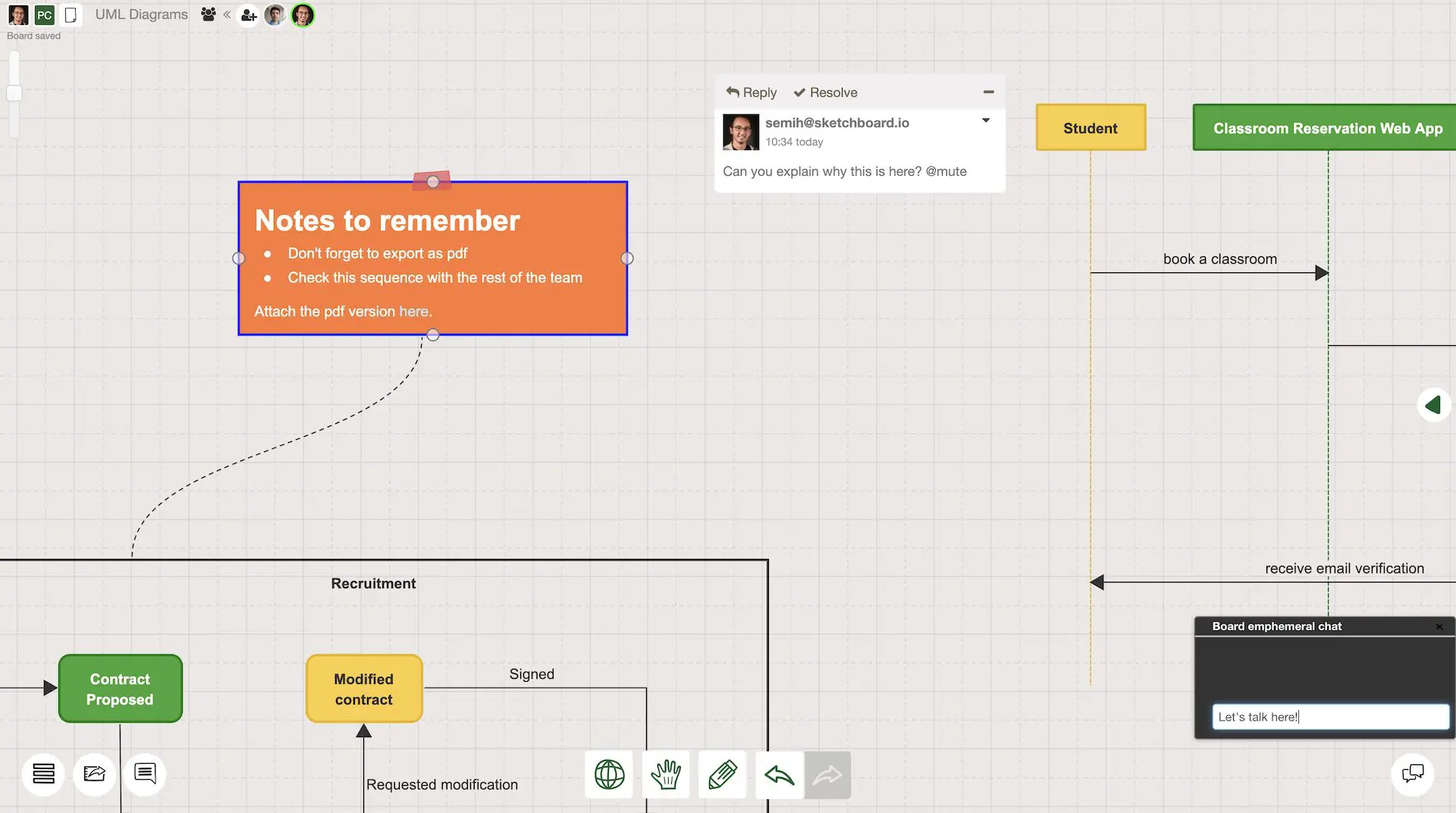
Being able to utilize a UML diagram tool will open up new possibilities in your team to visualize your ideas. Collaborative software diagramming tools sparks new ideas and makes difficult problems easy. Features such as comments and chat are worth checking out to get the best value from your online UML tool.
UML provides flexibility
UML offers a wide variety of structure and behaviour diagram options such as activity diagram, sequence diagram and deployment diagram. The uses of UML diagrams expanded into many other business and design related contexts. Using a UML Diagram tool can support you with various icons and structures that can be specialized in your domain.
UML Diagram maker for online collaboration
Do you need a UML class diagram for software documentation, a UML use case diagram for mapping high-level requirements, or something else? Sketchboard's UML Architecture diagram tool supports you to boost your team's creativity and efficiency.
UML Diagram tool for software professionals
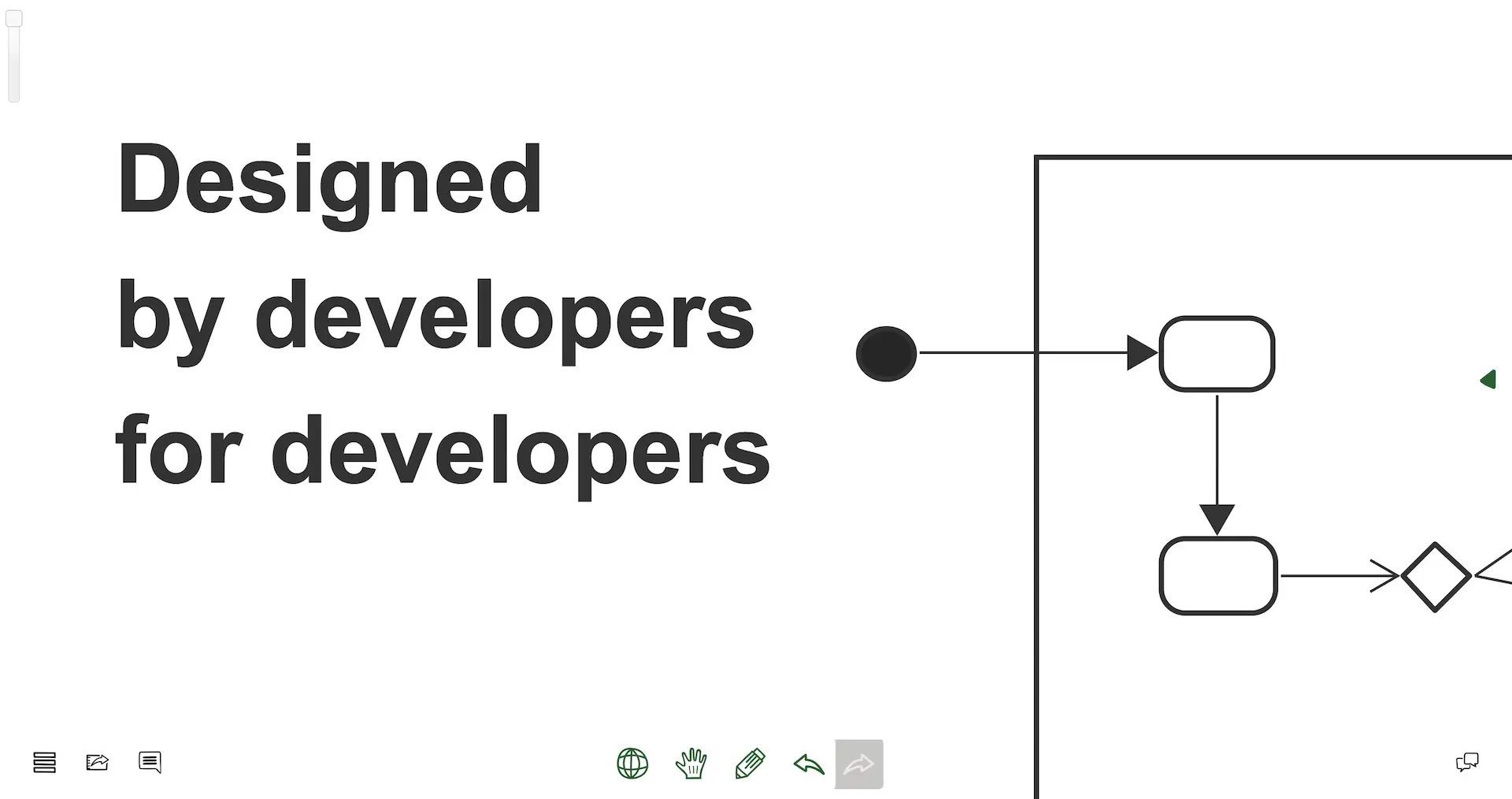
Sketchboard is designed for software engineering professionals by putting privacy and security to the core of its UML diagram software. Enjoy creating countless UML diagrams on Sketchboard's infinite canvas securely.
Share your UML diagram with ease
Online UML diagrams created on Sketchboard are easy to export as pdf, jpeg, png and svg. Slack, Google Drive and GitHub integrations make things even smoother for the software teams to develop class diagrams, sequence diagrams and all others.
Online UML tool for agile development
Creating UML Architecture Diagrams is not always simple. Sketchboard's real time collaboration features get your team a common understanding. Send and receive feedback with ease, increase the speed and quality of your software development process.
Uses for UML Diagram Software
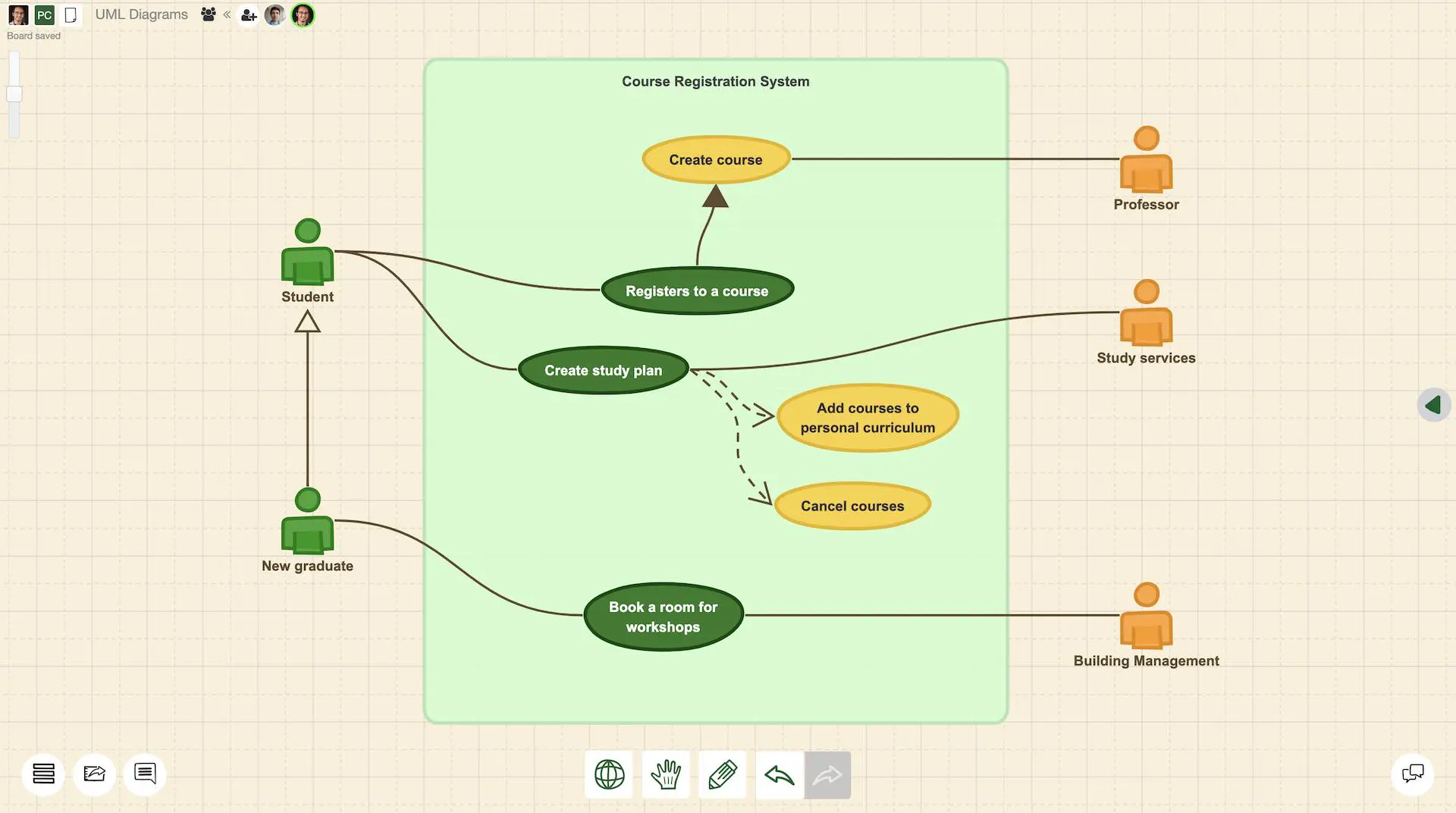
UML use case diagram tool
Use case diagrams allow you to draft out the services your system provides, giving you a chance to complete functionalities on a basic level before iterating your design further. Making a use case diagram with a UML diagram maker helps you to plan high level functionalities of your system.
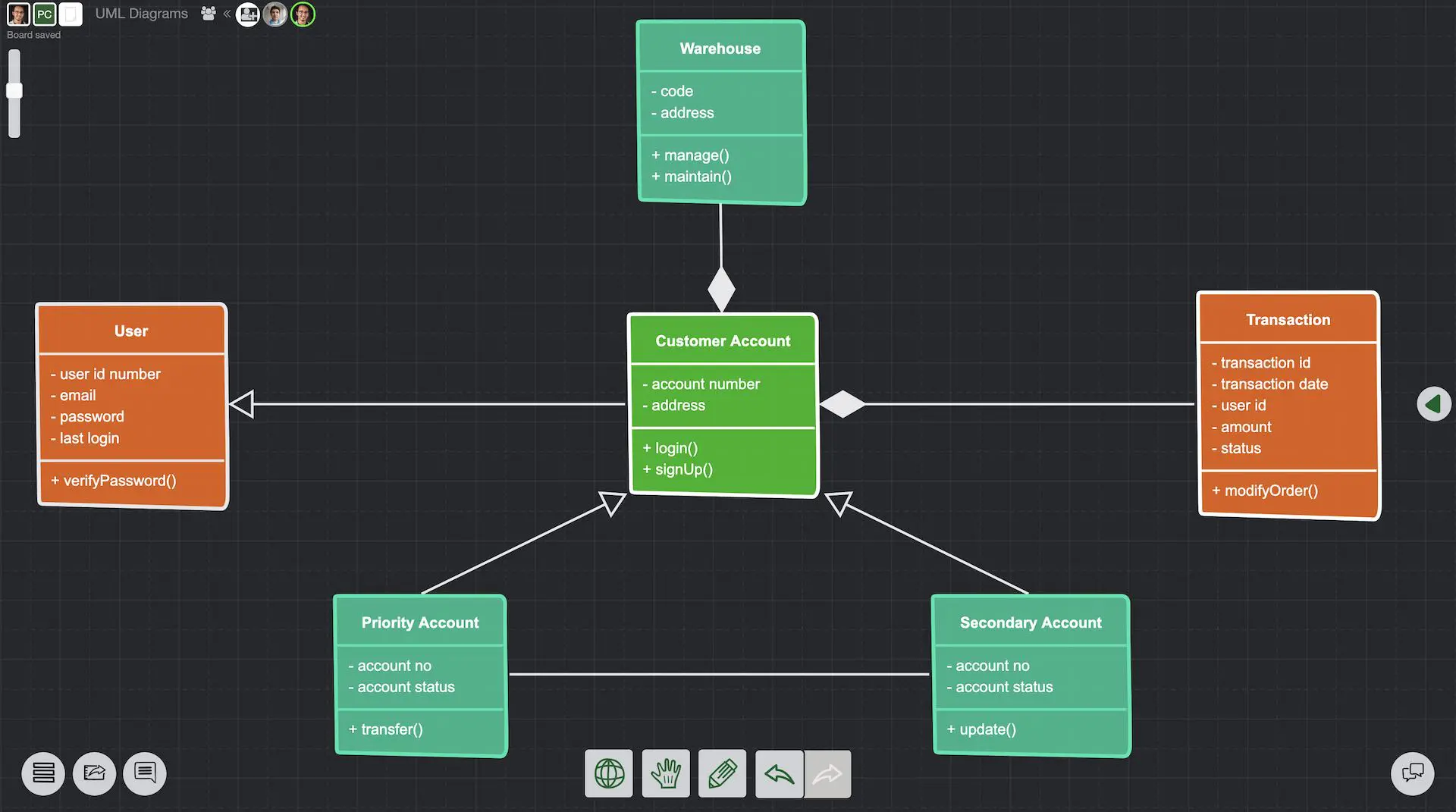
UML class diagram tool
Class diagram is one of the structural UML types. Make a UML class diagram to give a notation baseline for other UML structure diagrams. UML class diagram tool helps you to demonstrate the structure of classifiers in the system. Class diagrams are also useful for business-focused teams in the organization.
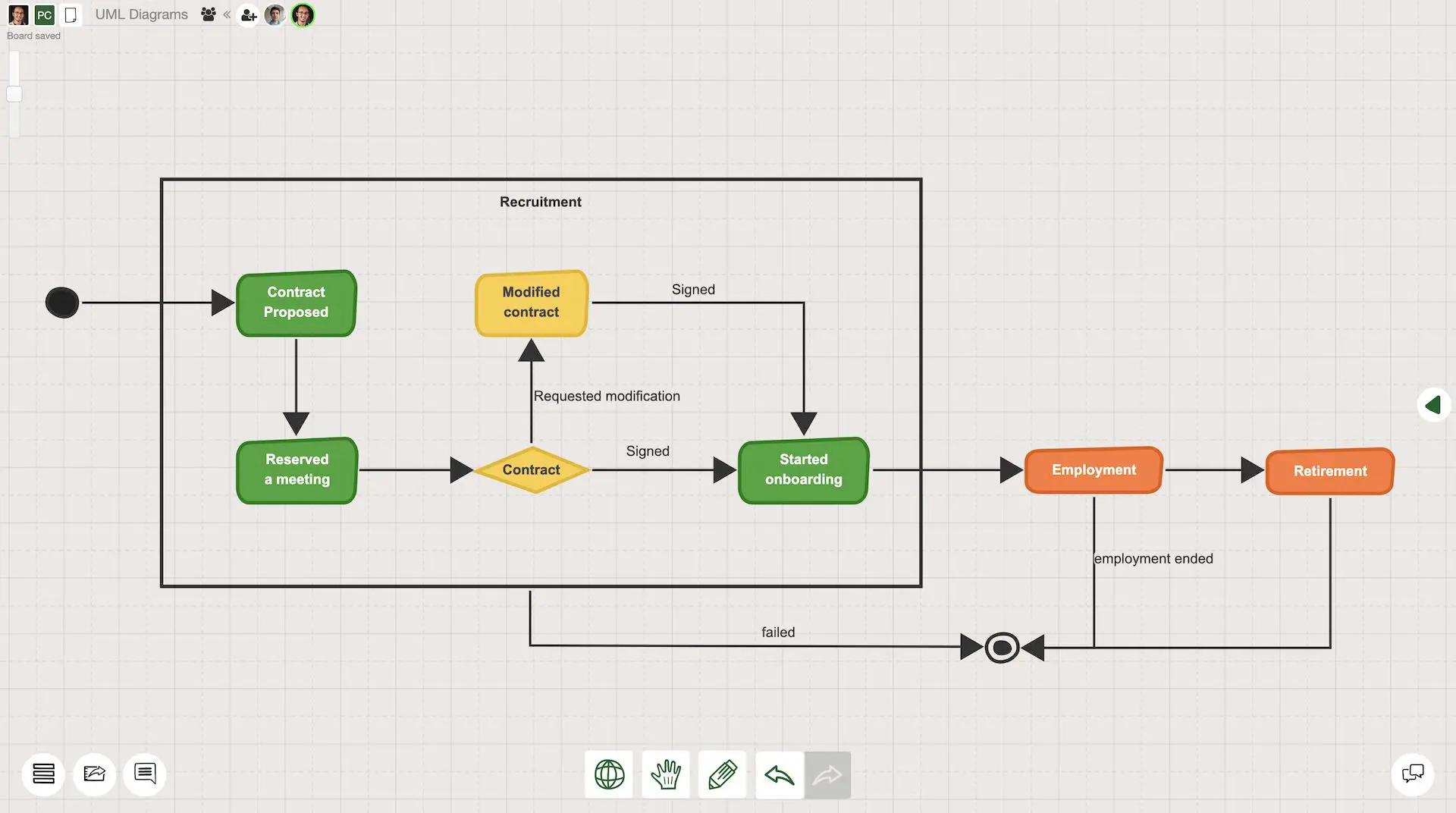
UML state machine diagram tool
State machine diagrams (also known as state diagrams) are behavioral UML diagrams. Create UML State diagrams with Sketchboard's online UML tool to document how an entity changes states as a response to different events. State diagrams are also useful to demonstrate the different use cases for business purposes.
UML diagrams: All you need to know
What is UML Diagram?
UML stands for Unified Modeling Language. It was developed during the 1990s to provide a standardized notation system for software development professionals. As UML gained popularity throughout the years, its usage has expanded into the fields of business, engineering, and design.
The fundamental purpose of UML diagrams in software development is to map out components and processes of software systems. It is most often used for software modeling by software engineers and is one of the most widely accepted notation systems. Just like any other language, software development professionals can reduce misunderstandings across different teams by using a standardized way of visualizing software models.
Why should you use UML Diagrams?
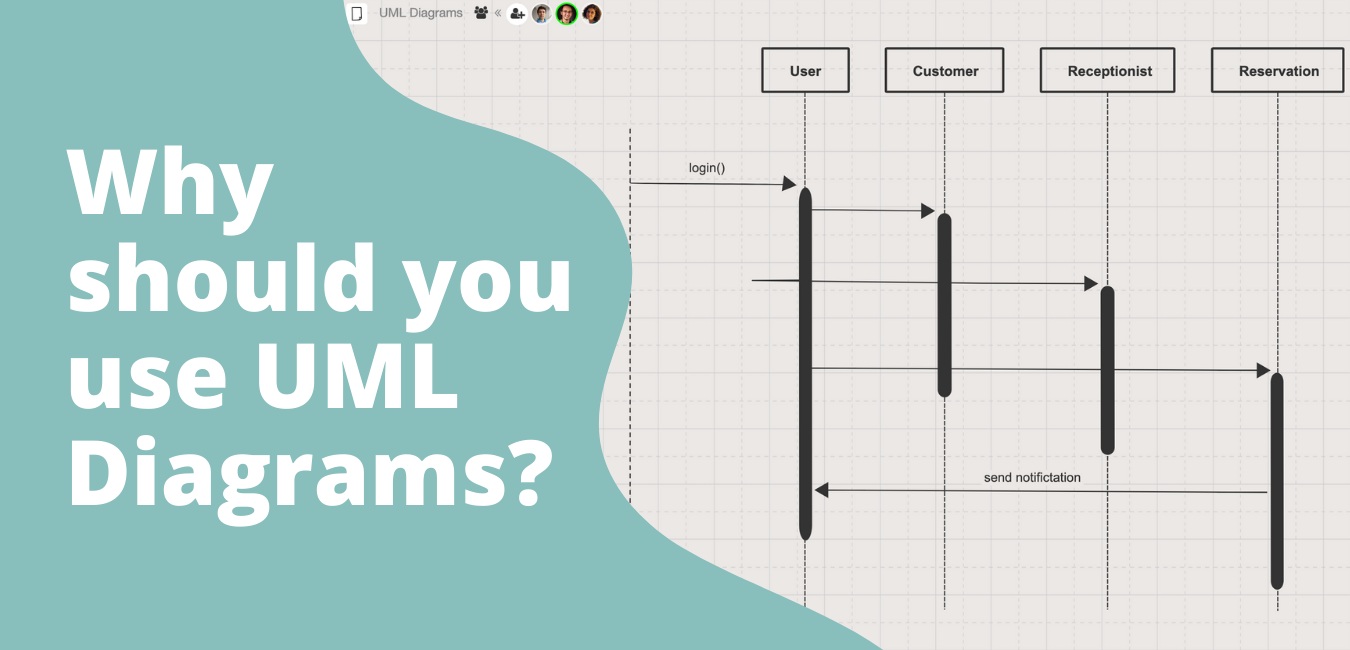
As visualizing complex concepts often helps different stakeholders to understand and explain problems easier, UML diagrams play a very useful role in software development processes. As mentioned earlier, UML diagrams provide a standardized approach for visualizing complex software design elements.
Since there are various stakeholders involved in a software development project, it is crucial to have a common language that everybody is familiar with. Using a common notation helps every stakeholder to understand how components are structured and interact in a software system. As UML diagrams gain popularity across different fields, they almost became the default way to visually describe complex problems.
What are UML diagram types?
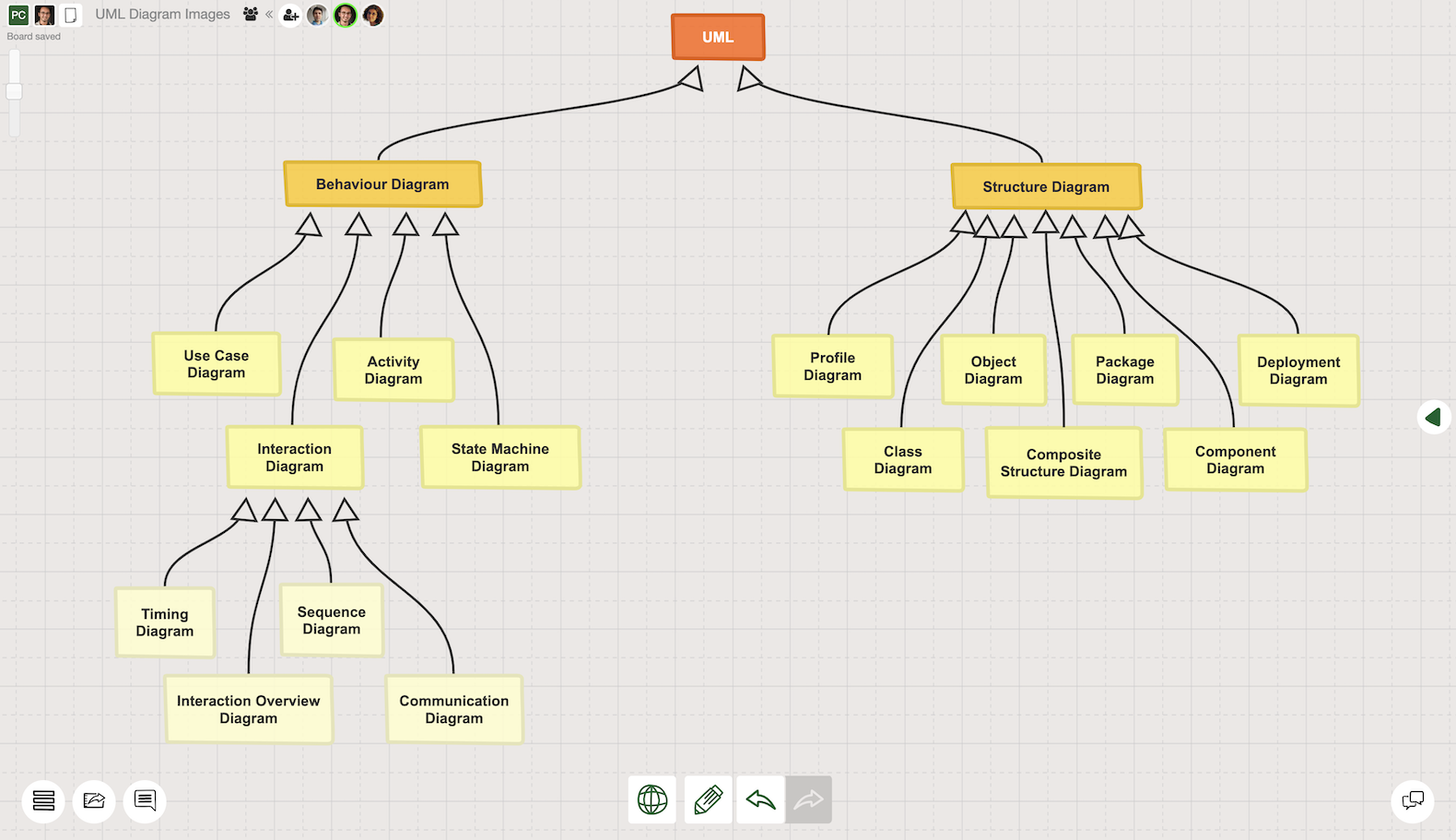
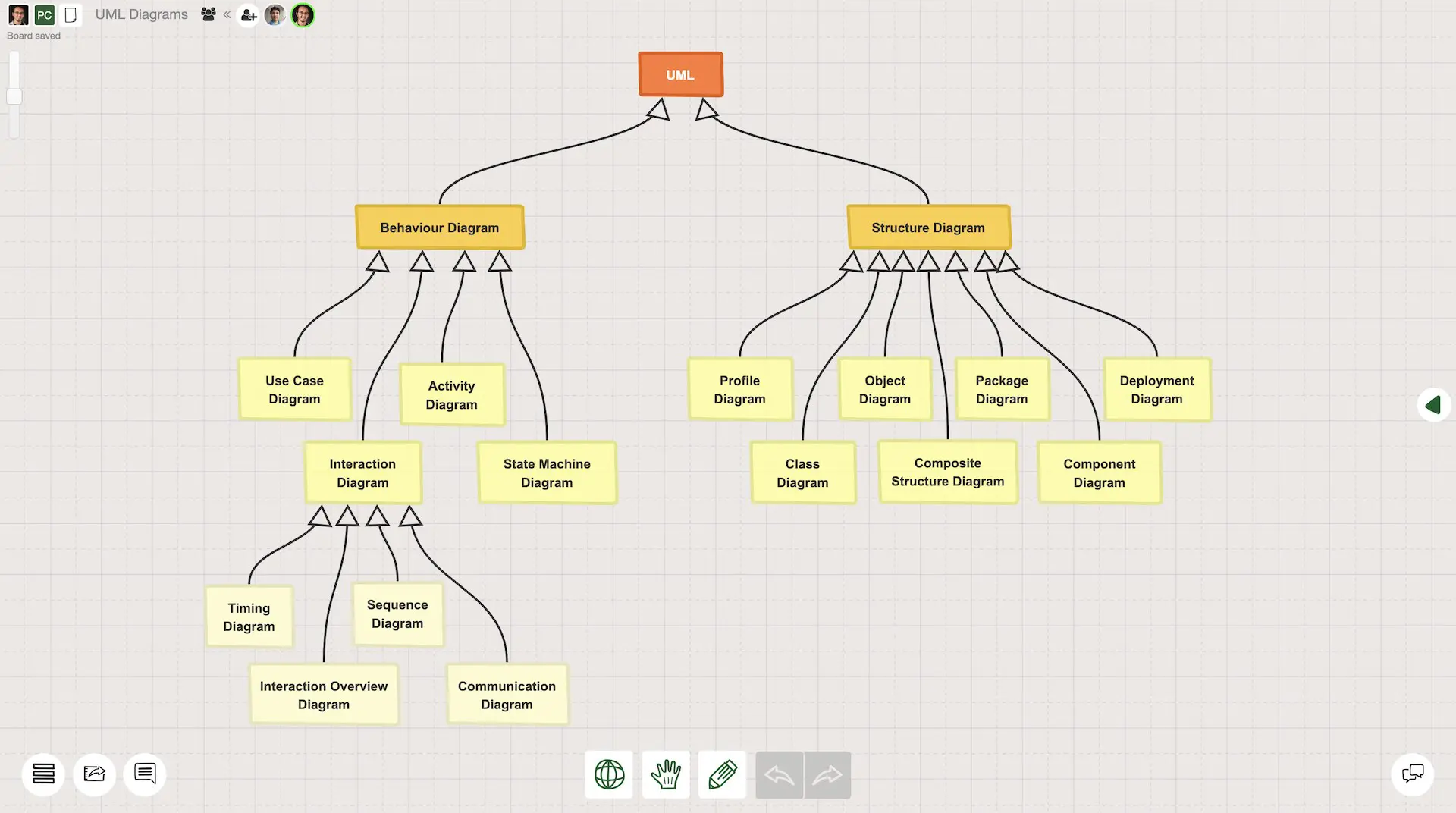
UML Diagrams are categorized into two types: structural diagrams and behavioral diagrams. Under each category, there are several diagram types. Structural diagrams visualize how components are organized in a static format, while behavior diagrams describe the interactions between components in a more dynamic format.
Structural diagrams
Structural diagrams explain how software system components are constructed by using various classes, attributes, and their relationships. Although there are many structural diagram types such as component diagrams, object diagrams, or deployment diagrams; the most commonly used structural diagrams are UML class diagrams.
- Class diagrams — demonstrate a static structure through class elements with name, attributes, operations, and behaviors
- Profile diagrams — describe lightweight extensibility mechanisms to customize UML using stereotypes, tagged values, and constraints
- Object diagrams — represent the structure at a specific time, also known as instant diagrams
- Package diagrams — explain how elements are grouped in packages with dependency relationships
- Deployment diagrams — represent hardware and software components of a system such as servers and databases
- Composite structure diagrams — depict the relationship between parts in a class
- Component diagrams — display how physical and conceptual elements are connected
Behavior diagrams
Behavior diagrams aim to demonstrate how the system is supposed to interact. These interactions could be between the system and its users, between different systems, or between the components of the same system.
- Use case diagrams — map out fundamental functions of a system from users perspective with actors, use cases, and relationships
- State machine diagrams — explain different states of an object in a system and how it changes under specific conditions
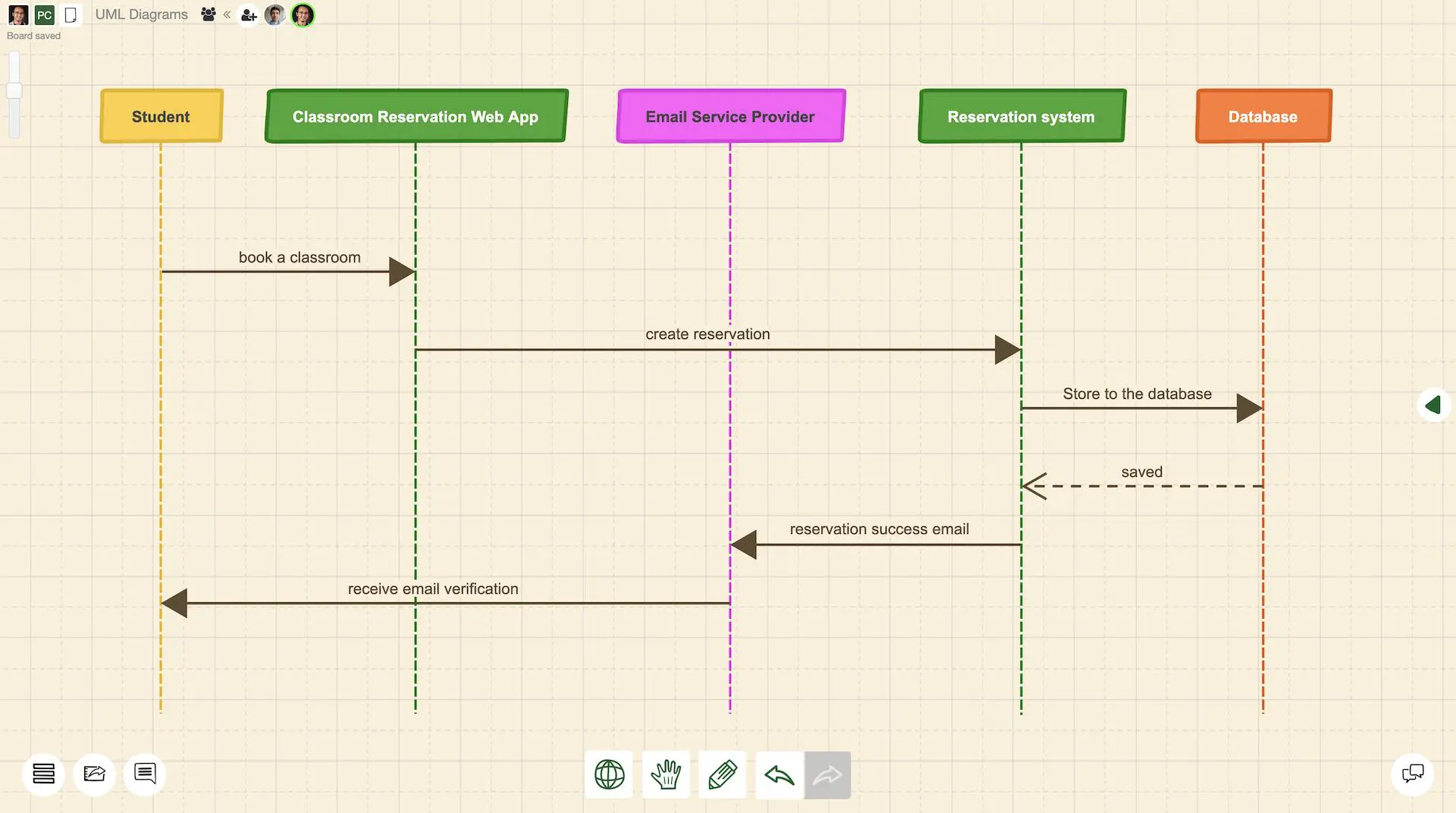
- Sequence diagrams — demonstrate specifics of operations with actors, lifelines, activation boxes, and messages
- Activity diagrams — demonstrate workflows and processes with activity components
- Communication diagrams — explain interactions between objects combining sequence, class and use case information
- Interaction overview diagrams — provide a high-level overview where other diagram types can be nested
- Timing diagrams — specify timing of interactions across different entities
How to make a UML diagram? — 5 Step Tutorial
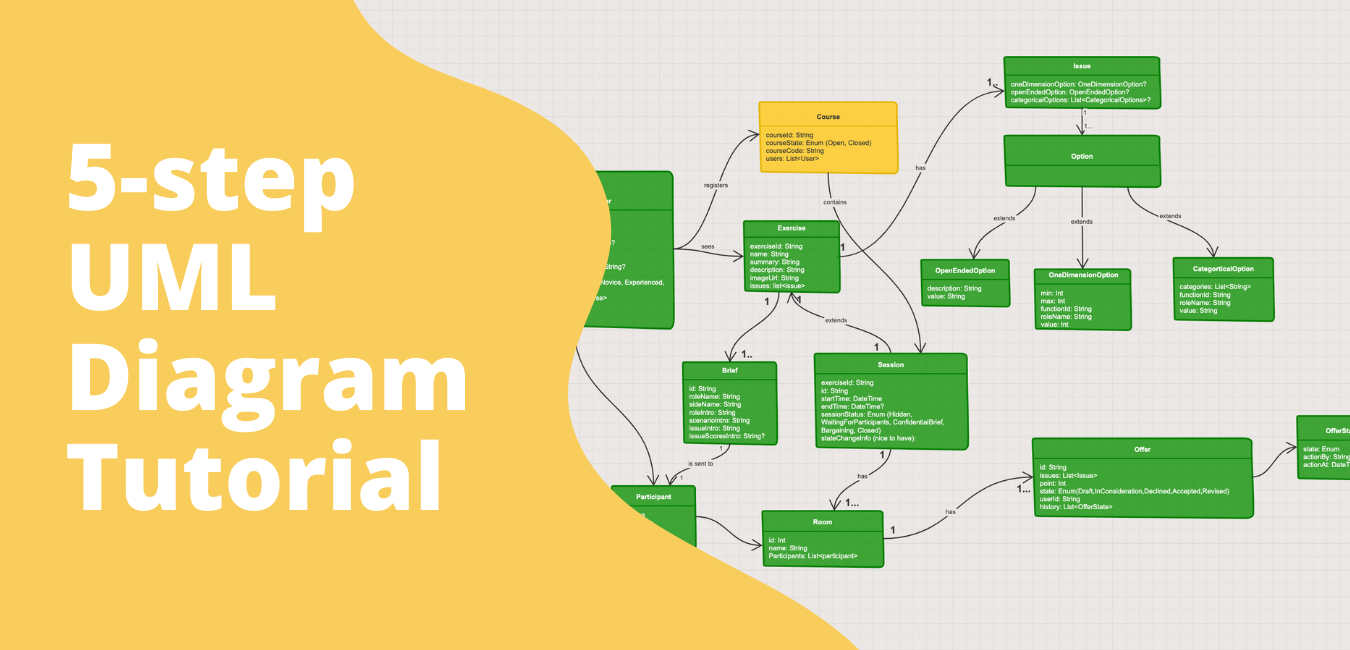
Depending on your needs, you can decide to use any type of UML diagrams. In practice, all you need to create a functional diagram is a pen and a paper. Online UML Diagramming Tools like Sketchboard can significantly improve your workflow and the efficiency of your team.
- Step 1: Start with a template or a blank page — Sketchboard constantly enhances its template library to speed up software development teams.
- Step 2: Put out the entities of the diagram — Use the shape library or double click the canvas to search for shapes. Sketchboard offers 400+ built in icons.
- Step 3: Define relationships — Connect elements through lines that are organically arranged. Add explanations, change line and arrow formats.
- Step 4: Rearrange and format the shapes — Add colors, format line thickness, create a clear picture.
- Step 5: Export, share and improve — Collaborate through comments, publish via Google Drive, Slack, Teams or Webex. Export as pdf, svg, png or jpeg.
UML Diagram FAQ
What is UML?
UML (Unified Modeling Language) is a standardized visual language used by software developers and system architects to design, document, and communicate software systems. UML provides a set of diagram types — including class diagrams, sequence diagrams, use case diagrams, activity diagrams, and state diagrams — that help teams visualize system architecture, plan features, and document design decisions before writing code.
What are the different types of UML diagrams?
UML diagrams fall into two main categories. Structural diagrams show the static architecture of a system: class diagrams, object diagrams, component diagrams, deployment diagrams, package diagrams, and composite structure diagrams. Behavioral diagrams show how the system behaves: use case diagrams, sequence diagrams, activity diagrams, state machine diagrams, communication diagrams, and interaction overview diagrams. Most teams use class diagrams for architecture, sequence diagrams for workflows, and use case diagrams to capture requirements.
Where can I create UML diagrams online?
You can create UML diagrams online with Sketchboard's UML diagram tool — no installation required. Simply open your browser, start a new board, and use the UML shape library to drag-and-drop class diagrams, sequence diagrams, use case diagrams, and more. Collaborate in real time with your team, export diagrams as images, and integrate your UML designs with your development workflow. Sign up free to get started.
How do I create a UML diagram?
To create a UML diagram: 1) Identify which UML diagram type fits your need (class diagram for architecture, sequence diagram for interactions, use case diagram for requirements). 2) Open Sketchboard's UML diagram tool and select the relevant shape library. 3) Drag shapes onto the canvas and connect them with UML-standard relationships. 4) Add labels, multiplicities, and notes. 5) Share the board link with your team for real-time collaboration and feedback.